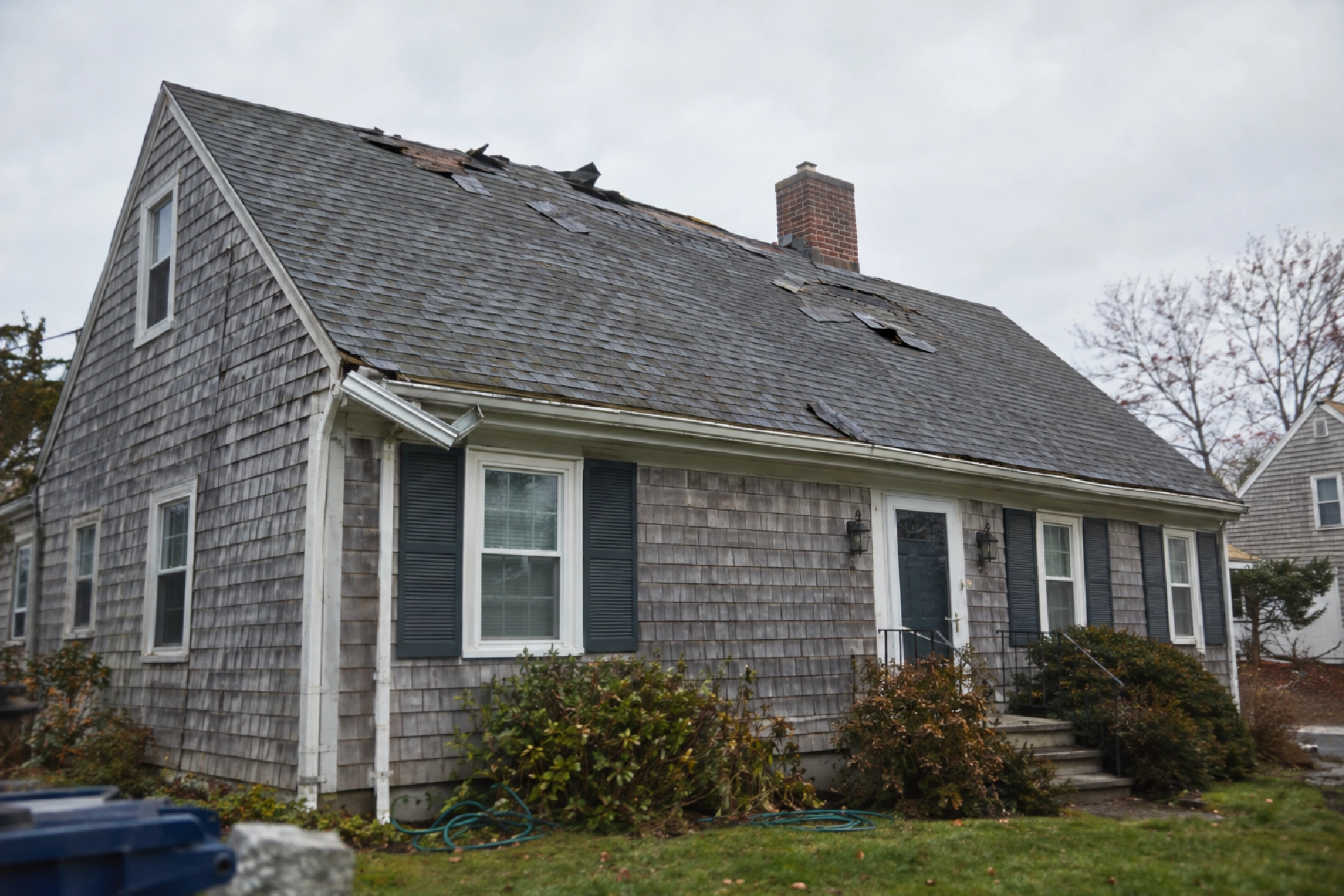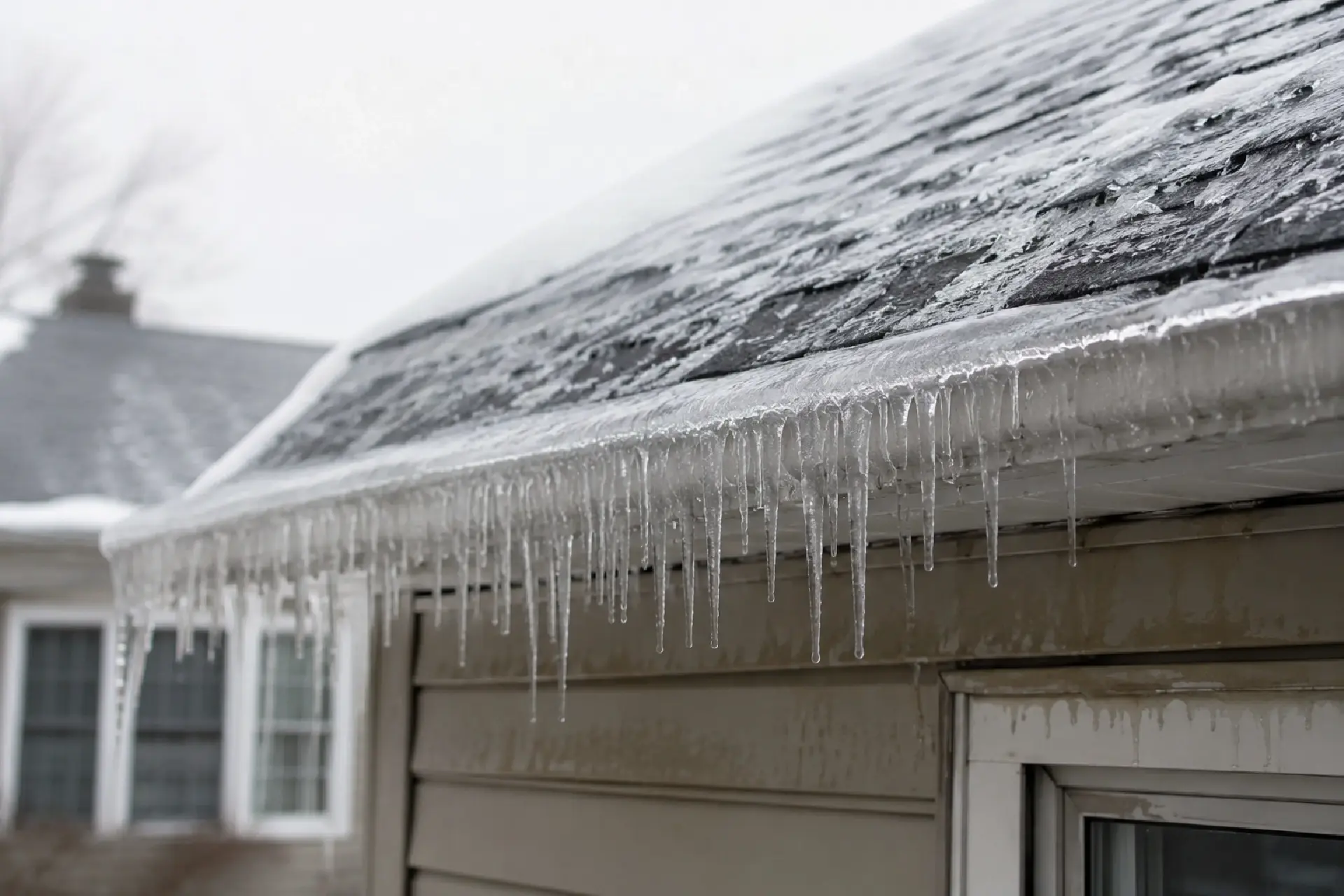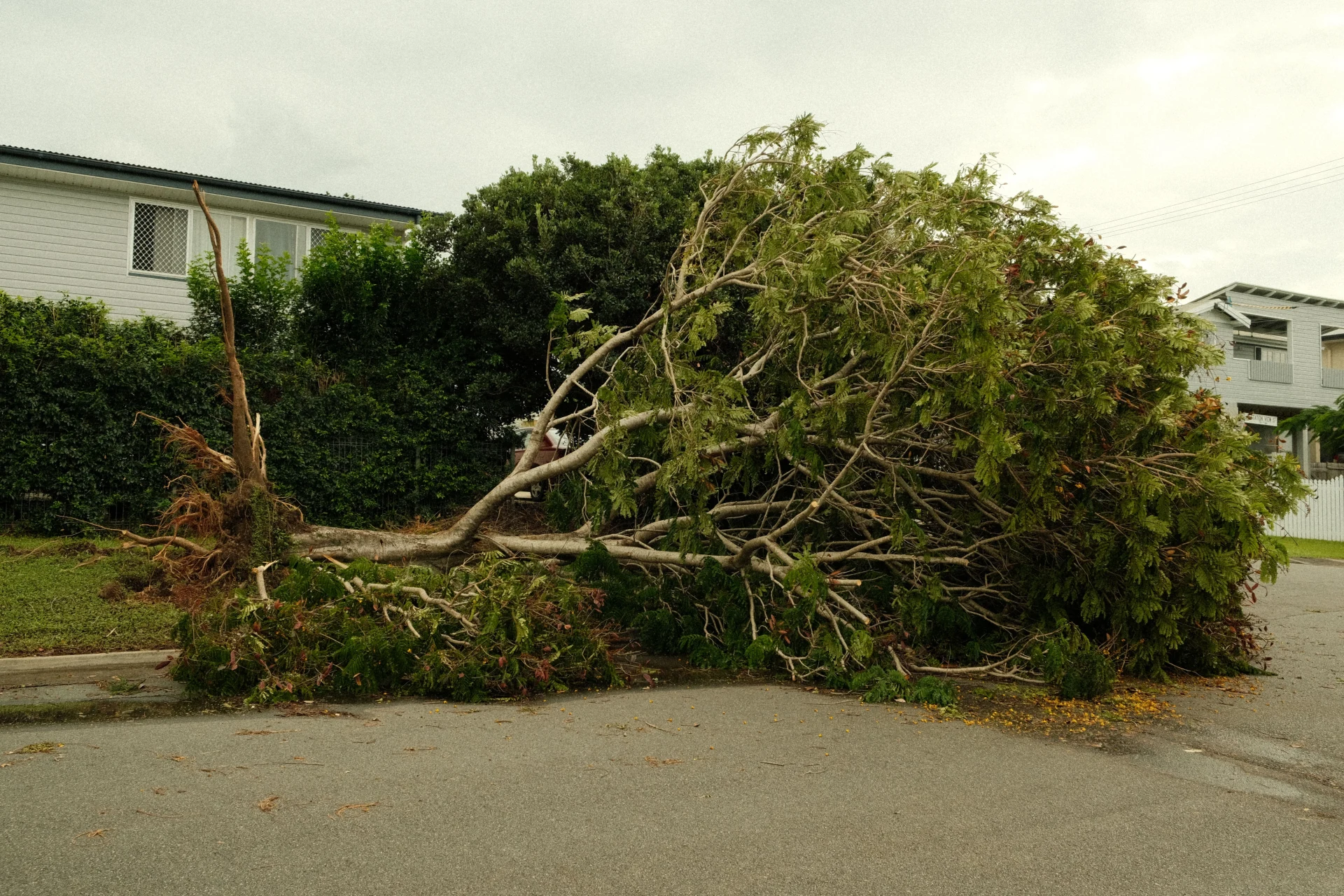
It’s one of the most common questions Massachusetts property owners ask after a storm: a tree from next door came down on your roof, your fence, or your car — so your neighbor’s insurance pays, right? The answer surprises most people, and getting it wrong can cost you thousands. Here’s how responsibility and coverage actually work when a neighbor’s tree damages your Massachusetts property.
The General Rule: Your Own Insurance Usually Pays
This is the part that catches most Massachusetts homeowners off guard. When a neighbor’s tree falls on your property due to a natural event — wind, a storm, snow load, or an act of nature — the damage is typically covered by your homeowner’s insurance, not your neighbor’s. It doesn’t matter that the tree was rooted on their land. What matters is whose property was damaged.
The logic behind this is that insurance follows the damaged property, not the origin of the object that caused the damage. Your policy covers your house, your detached structures, and often your vehicle (under separate auto coverage). So the claim goes through your insurer, who may later attempt to recover costs from the neighbor’s insurer through a process called subrogation — but that happens behind the scenes and doesn’t change the fact that you file with your own carrier first.
The Exception: When Negligence Shifts Responsibility
Your neighbor’s insurance becomes relevant when negligence is involved. If the tree that fell was visibly dead, diseased, or dangerous — and your neighbor was aware of it or had been warned — responsibility can shift to them. In that scenario, the tree didn’t fall because of an unforeseeable natural event; it fell because a known hazard wasn’t addressed.
The challenge is proof. Establishing negligence in Massachusetts requires demonstrating that the neighbor knew or reasonably should have known the tree posed a risk, and failed to act. Documented prior complaints, photographs of visible decay, or written warnings all matter here. Without that evidence, insurers default to treating the event as an act of nature — which puts the claim back on your own policy. This is the same evidentiary battle that plays out in reverse when an insurer tries to deny your claim by arguing your tree was diseased, which is one of the recurring disputes we handle on fallen tree damage claims across Massachusetts.
What About the Cost of Removing the Tree?
Here’s another area where Massachusetts property owners get an unpleasant surprise. Even when the damage to your structure is covered, the cost of removing the fallen tree is often treated separately — and restricted. Most Massachusetts homeowner policies only cover debris removal when the tree struck a covered structure, and even then subject to a sublimit that’s frequently as low as $500.
If the tree missed your house but destroyed your fence, or landed in your yard without striking a covered structure, removal may not be covered at all. And if the removal cost exceeds the sublimit — which it often does for large hardwoods — you’re left covering the difference. Understanding exactly what your policy says about debris removal before you authorize expensive tree work can prevent a costly assumption.
When the Town or a Public Tree Is Involved
Massachusetts has a dense population of mature street trees and trees on public land. If a municipally owned tree falls on your property, responsibility depends on whether the municipality was negligent — and claims against a Massachusetts city or town involve their own procedures, notice requirements, and strict timelines under the Massachusetts Tort Claims Act. These claims are more complex than a standard homeowner’s claim and are easy to mishandle if you’re not aware a separate process even applies.
Why These Claims Are Harder Than They Look
The “whose tree is it” question feels like it should determine everything, but in practice, fallen tree claims in Massachusetts turn on documentation, policy language, and the cause-of-loss determination — not property lines. Insurers know most homeowners assume the neighbor pays, and they use that confusion to move claims in whatever direction costs them least. Between debris removal sublimits, roof depreciation on older homes, and disputes over whether a tree was healthy or hazardous, the gap between what you assume you’re owed and what you actually recover can be significant.
That’s exactly where independent representation changes the outcome. A licensed public adjuster for fallen tree damage in Massachusetts documents the full scope of loss, interprets your policy correctly, and handles the insurer directly — so the claim reflects what your property actually sustained, not what your insurer prefers to pay.
What to Do If a Neighbor’s Tree Damages Your Massachusetts Property
Document everything before touching the tree, notify your own insurer, and don’t assume the neighbor’s policy is the answer — or that removal is automatically covered. If the tree was visibly hazardous, gather any evidence pointing to prior knowledge. And before you accept your insurer’s assessment or authorize costly removal, get an independent review.
Marinilli Adjusters works exclusively for Massachusetts property owners on a contingency basis, with no fees until we recover for you. If a fallen tree has damaged your property — yours or a neighbor’s — contact us for a free inspection before you file or sign anything.