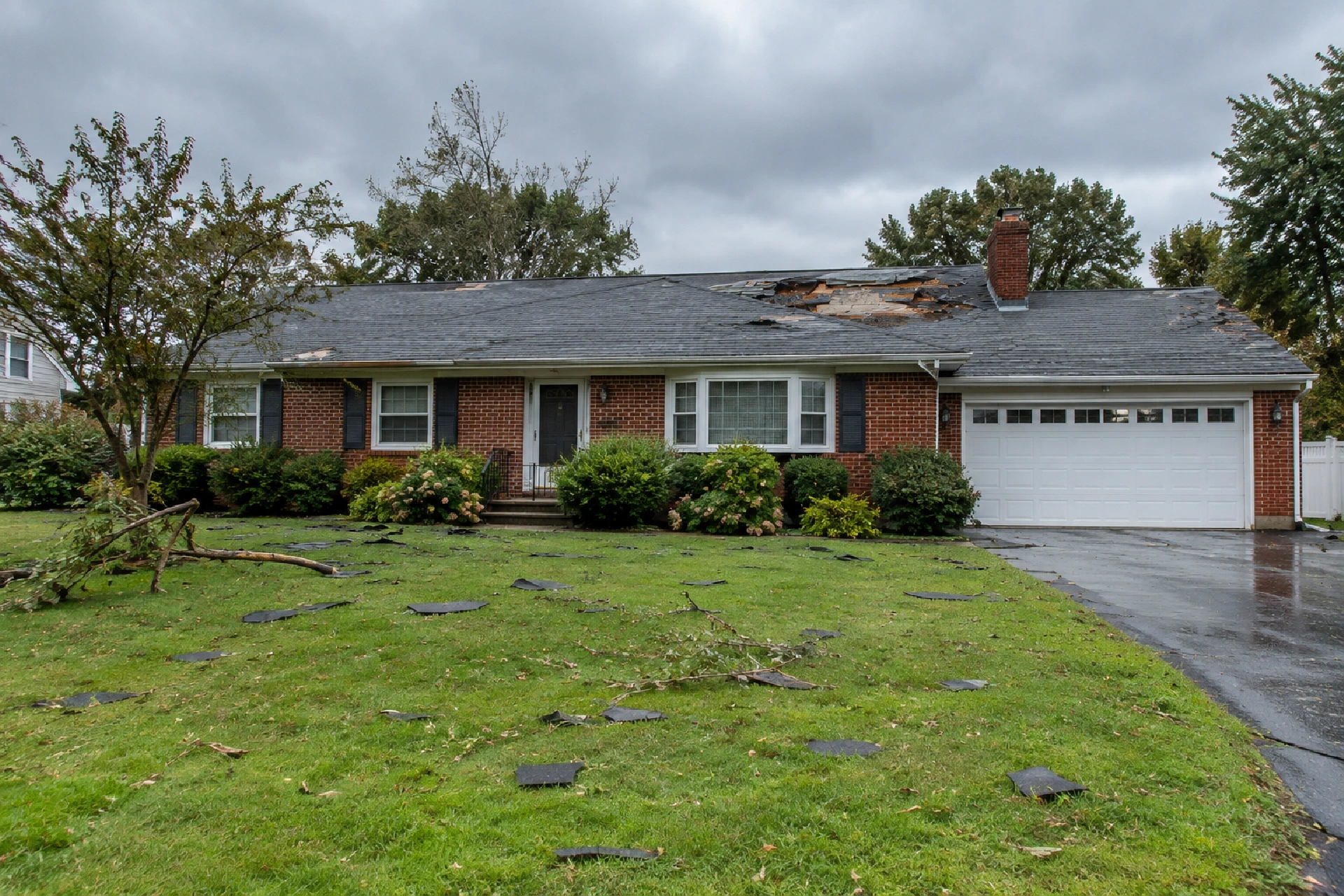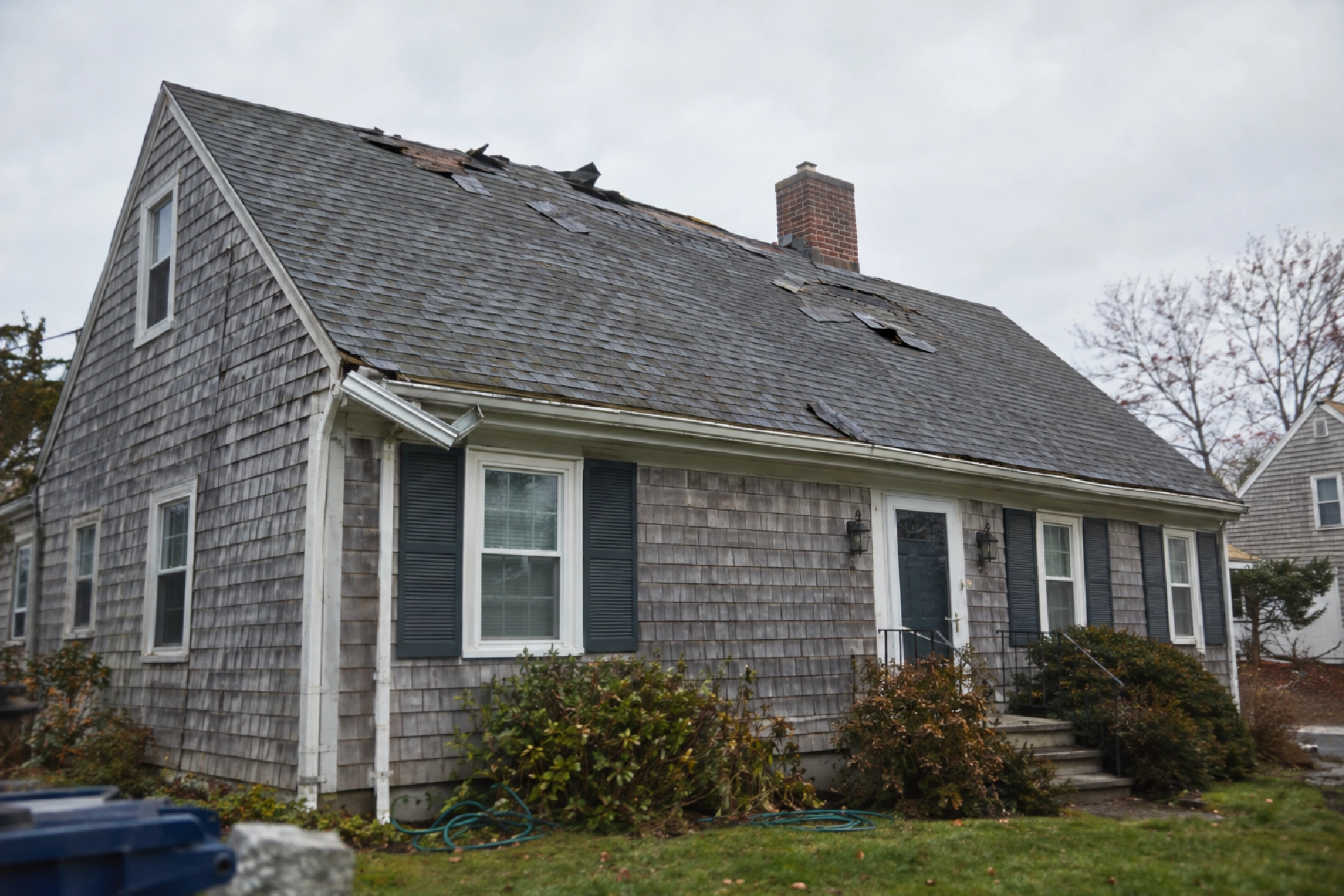
Wind is the only major property peril that routinely does thousands of dollars in damage while leaving a roof that still looks fine from the street. A fire leaves char. A flood leaves a waterline. Wind lifts a shingle, breaks its seal, sets it back down, and moves on, and the damage stays invisible until the next hard rain finds the opening. That invisibility is exactly why wind damage insurance claims in Massachusetts are among the easiest for carriers to underpay, and why so many homeowners settle for a fraction of what they’re owed without realizing it.
Why Wind Damage Is So Different From Every Other Claim
Most property damage announces itself. Wind damage hides. The force that lifts a shingle or loosens a section of flashing rarely leaves a dramatic visual, and much of the harm happens to parts of the building you can’t see from the ground: the seals that bond shingles together, the underlayment beneath them, the flashing around chimneys and vents, and the seams where siding meets trim.
This creates a dangerous gap in Massachusetts. A homeowner looks up after a storm, sees a roof that appears intact, and assumes there’s nothing to claim, or files only for the obvious missing pieces. Meanwhile the real damage, the broken seals and compromised barriers, sits waiting. When the leak finally appears months later, the connection to the original wind event has faded, and the insurer is far more likely to call it a maintenance problem than a covered loss.
The Specific Damage That Hides After a Massachusetts Windstorm
Understanding what wind actually does helps you know what to look for and what to insist gets documented. The damage that most often goes unseen and unclaimed includes:
- Broken shingle seals, where wind lifts a shingle enough to break the adhesive bond but not enough to remove it, leaving it loose and no longer watertight
- Creased or bent shingles that look flat from below but have a fracture line that will fail under the next storm
- Loosened or displaced flashing around chimneys, skylights, and vents, the most common hidden entry point for water
- Lifted or separated siding and trim that opens the wall system to moisture without any obvious gap
- Granule loss that strips the protective surface from shingles and accelerates their failure
- Small envelope breaches that let wind-driven rain into the wall or attic, where it soaks insulation and framing out of sight
None of these is visible from a driveway, and several are hard to see even from a ladder. That’s why they so often go undocumented and unpaid.
How Massachusetts Insurers Use That Invisibility Against You
The hidden nature of wind damage hands carriers a set of ready-made arguments. Because the damage isn’t obvious, they can inspect quickly, document only the visible pieces, and issue a settlement that looks reasonable against what’s plainly there while ignoring everything beneath the surface. If you accept it, the claim closes at that number.
The timing works in their favor too. When hidden wind damage finally causes a visible leak months later, the insurer can argue the damage is new, unrelated, or the result of poor maintenance, precisely because the original wind event is now hard to prove. The invisibility that let them underpay the first claim becomes the reason they can deny the second. Massachusetts homeowners end up paying out of pocket for damage a covered storm actually caused.
What Massachusetts Homeowners Should Do After a Windstorm
The lesson isn’t to panic after every gust, it’s to treat wind more seriously than its surface appearance suggests. After any significant Massachusetts windstorm, document conditions even if the roof looks fine: note the date, save any weather reports, and photograph what you can see. If neighbors are having roof work done or you spot debris, missing pieces, or displaced flashing anywhere nearby, treat that as a signal to look closer at your own property.
Most importantly, don’t let a quick glance from the ground decide whether you have a claim. The damage that matters most is the damage you can’t see, which means an inspection by someone who knows where wind hides its work is the only reliable way to know what you’re dealing with. An insurer’s adjuster inspects with the carrier’s interests in mind and every incentive to keep the scope narrow. An independent public adjuster for wind damage claims in Massachusetts inspects the full building envelope, documents the hidden damage before it turns into a bigger problem, and builds the record that keeps the whole loss inside the claim.
Don’t Let a Hidden Wind Damage Insurance Claim in Massachusetts Cost You Later
If a windstorm has passed over your Massachusetts property, the smartest move is to find out what it actually did before the damage reveals itself on your ceiling. Marinilli Adjusters offers free, no-obligation inspections. We examine the entire building envelope, document damage the naked eye and the insurer’s adjuster both miss, and pursue the full wind damage insurance claim your Massachusetts property is owed, with no fees until we recover for you.