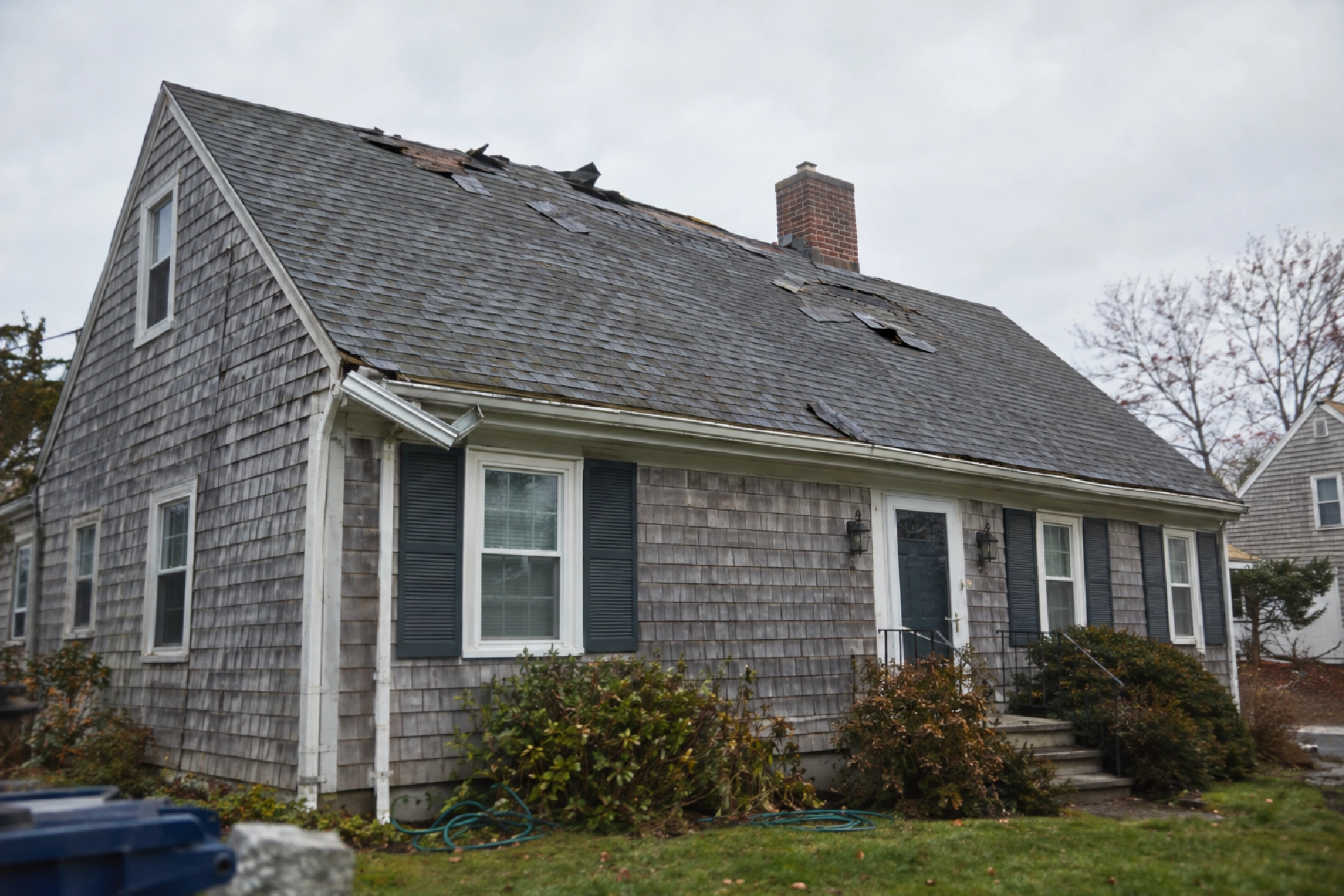
Every Rhode Island winter, the same quiet disaster plays out on roofs across the state. Snow sits on the roof, a ridge of ice builds up along the edge, and water starts finding its way inside, often without the homeowner noticing until a ceiling stains or paint begins to bubble. Ice dams are among the most common cold-weather roof problems in Rhode Island, and they produce some of the most frequently disputed insurance claims. Understanding how they work, and how your policy treats them, can be the difference between a covered loss and one you pay for yourself.
What an Ice Dam Actually Is
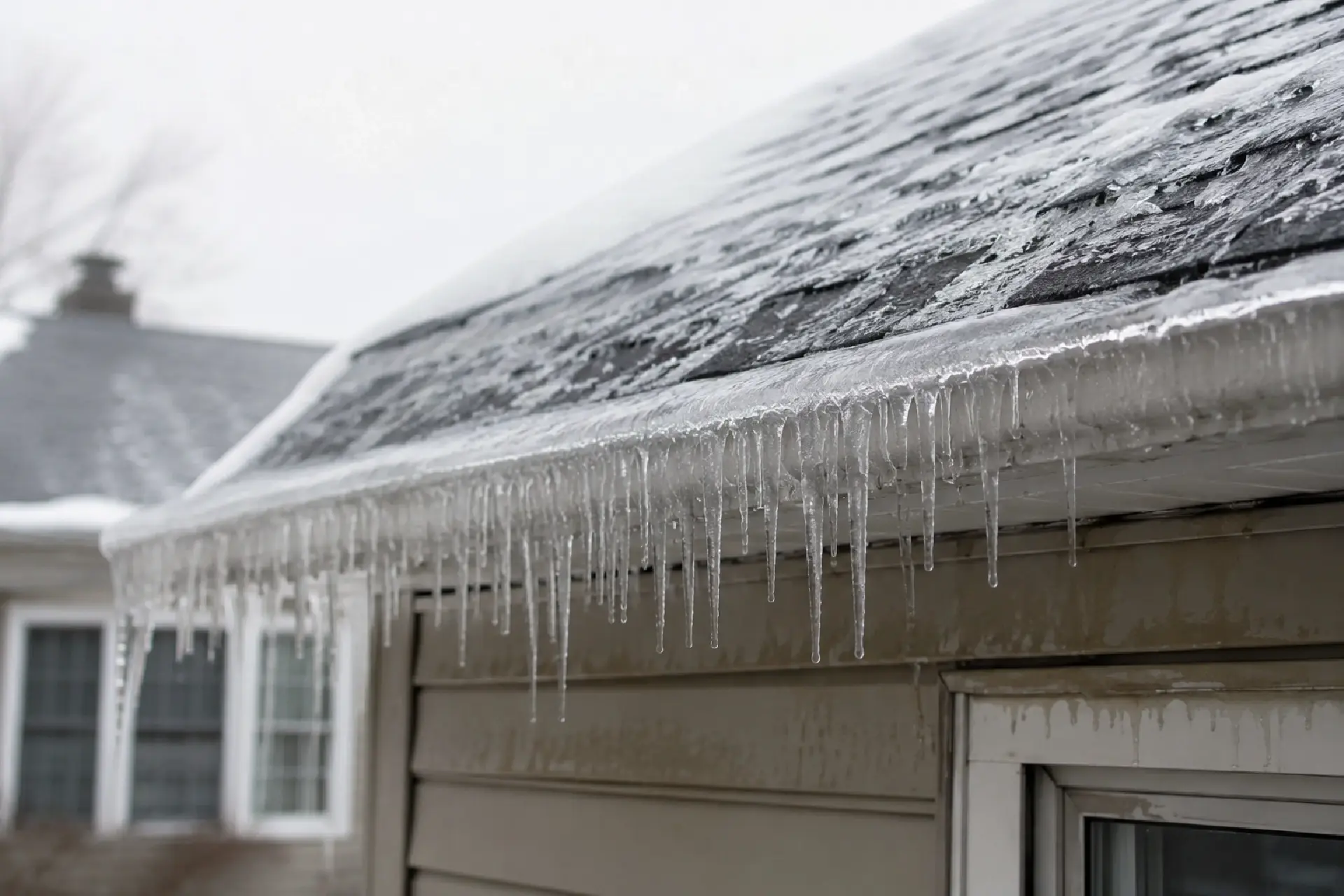
An ice dam is a ridge of ice that forms at the edge of a roof and stops melting snow from draining off. It sounds simple, but the mechanism behind it is what makes it so damaging. Heat escaping from the living space below warms the upper part of the roof, melting the underside of the snow layer. That meltwater runs down the slope until it reaches the cold overhang at the eaves, where there’s no warmth from the house beneath it, and refreezes.
As the cycle repeats, the ice ridge grows and backs up a pool of water behind it. Since a roof is designed to shed water flowing downward, not to hold standing water, that trapped pool works its way under the shingles, through the underlayment, and into the roof deck and the structure below. By the time it shows up on a Rhode Island homeowner’s ceiling, it has already traveled through several layers of the roof system.
Why Rhode Island Is Especially Prone to Ice Dams
Rhode Island sits in a climate zone that’s almost tailor-made for ice dam formation. Winters bring repeated freeze-thaw cycles rather than one long deep freeze, and that back-and-forth is exactly what drives the melt-and-refreeze pattern ice dams depend on. Coastal storms drop heavy, wet snow that lingers on roofs, and temperature swings around the freezing mark do the rest.
The state’s older housing stock compounds the problem. Many Rhode Island homes were built before modern insulation and ventilation standards, so heat escapes into the attic more readily, warming the roof deck and feeding the exact conditions that create ice dams. A poorly ventilated attic in a hundred-year-old Providence home is far more vulnerable than a newer, tightly sealed build. That combination of climate and construction is why ice dam claims cluster in Rhode Island every winter.
Is Ice Dam Damage Covered by Rhode Island Insurance?
This is where it gets complicated, and where claims get contested. In general, most Rhode Island homeowner policies do cover sudden and accidental damage caused by ice dams, such as water that backs up under shingles and damages your ceiling, walls, or insulation. That’s the good news, and it’s why filing a claim is often worthwhile.
The dispute usually centers on cause. Insurers frequently argue that ice dam damage results from poor maintenance, inadequate attic insulation, or clogged gutters, rather than a sudden weather event, and they use that argument to reduce or deny the claim. There’s also the question of what’s covered versus what isn’t. Damage the water causes inside the home is typically covered, but the cost of removing the ice dam itself, or fixing the underlying insulation and ventilation issues that let it form, often is not. Policy language varies significantly on these points, which is why reading your specific coverage, or having someone interpret it for you, matters before you assume anything.
Where Ice Dam Claims Go Wrong in Rhode Island
The most common way these claims get underpaid is on the hidden damage. A homeowner sees a ceiling stain, reports it, and the insurer settles on the visible interior damage, while the water that traveled through the decking, underlayment, and insulation goes undocumented and unpaid. That deeper damage doesn’t disappear. It leads to rot, mold, and structural problems that surface months later, long after the claim has closed.
The maintenance argument is the other frequent sticking point. Because ice dams involve insulation and ventilation, insurers have an easy opening to shift blame onto the property owner. Countering that requires documenting the specific weather conditions that triggered the event and establishing that the damage was sudden rather than the product of long-term neglect. Without that evidence, the carrier’s version tends to prevail, and the homeowner absorbs a loss the policy should have covered.
Ice Dams Are Only One Winter Threat to Your Roof
Ice dams rarely arrive alone. The same nor’easters that pile snow onto Rhode Island roofs also bring the heavy winds and saturated ground that send trees down onto homes, and the two often strike in the same storm. The preparation that protects you from one protects you from the other, which is why documenting your property before winter matters so much. Our guide on preparing your Rhode Island property for a storm-season claim walks through the pre-loss steps that make any winter roof claim easier to prove.
What Rhode Island Homeowners Should Do About Ice Dam Damage
If you spot signs of an ice dam or the damage it causes, water stains on ceilings, peeling paint, damp insulation, or icicles hanging heavy along the eaves, document everything before you act. Photograph the exterior ice buildup, the interior damage, and the conditions during the storm that caused it. Report the loss to your insurer promptly, since Rhode Island policies carry notice requirements, and resist the urge to accept a settlement based only on what’s visible.
Because the real cost of ice dam damage almost always runs deeper than the surface, an independent assessment protects you from settling short. A public adjuster handling roof damage claims in Rhode Island documents the full path of the water intrusion, counters the maintenance argument insurers lean on, and negotiates the claim directly so your settlement reflects the complete loss, not just the stain on the ceiling.
Dealing With Ice Dam Damage This Winter? Get a Free Inspection
If an ice dam has damaged your Rhode Island home, don’t let the insurer’s first assessment become the final word, especially when so much of the damage stays hidden. Marinilli Adjusters offers free, no-obligation inspections. We document the full extent of the loss, explain what your policy covers, and pursue the roof damage insurance claim your Rhode Island property is owed, with no fees until we recover for you.