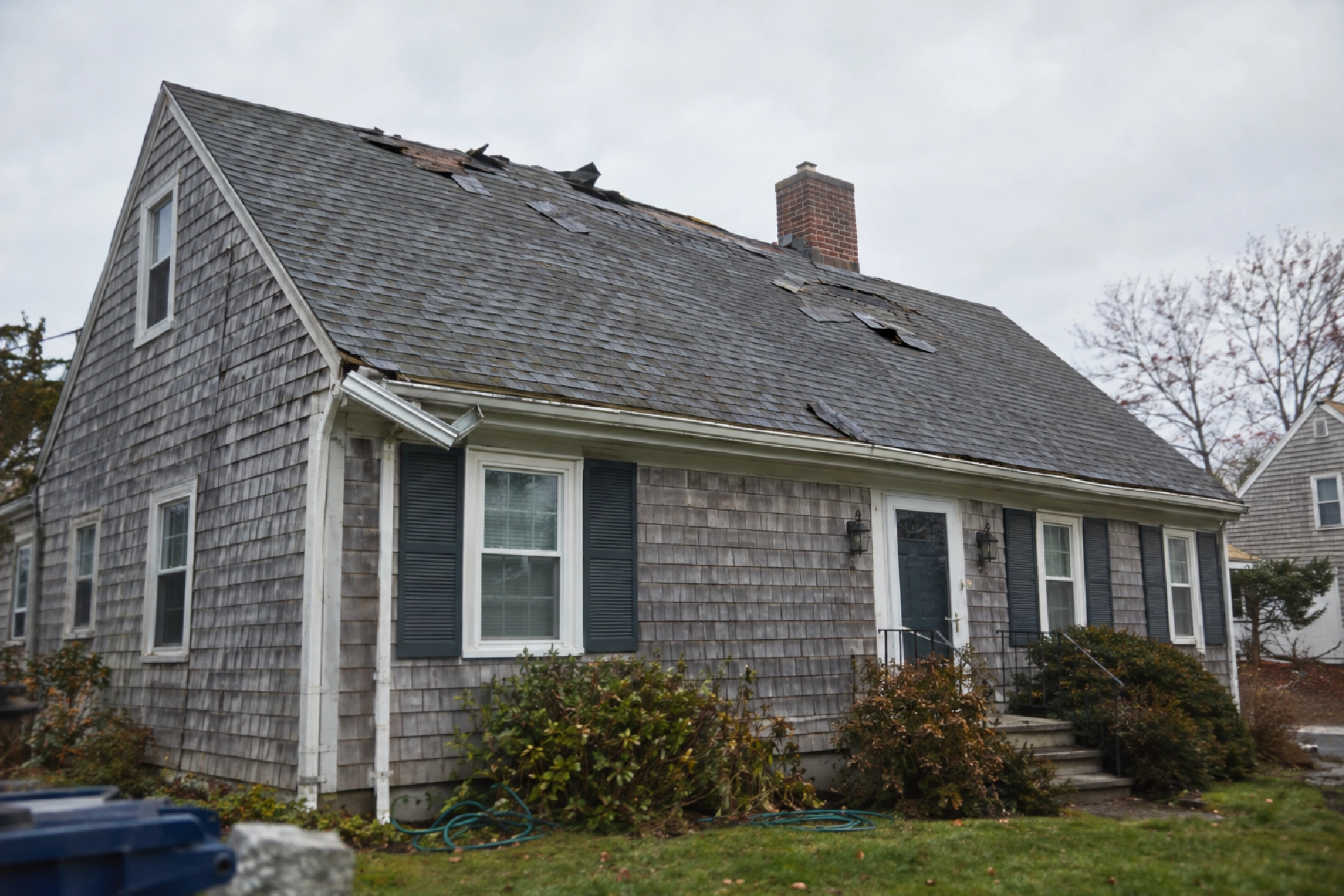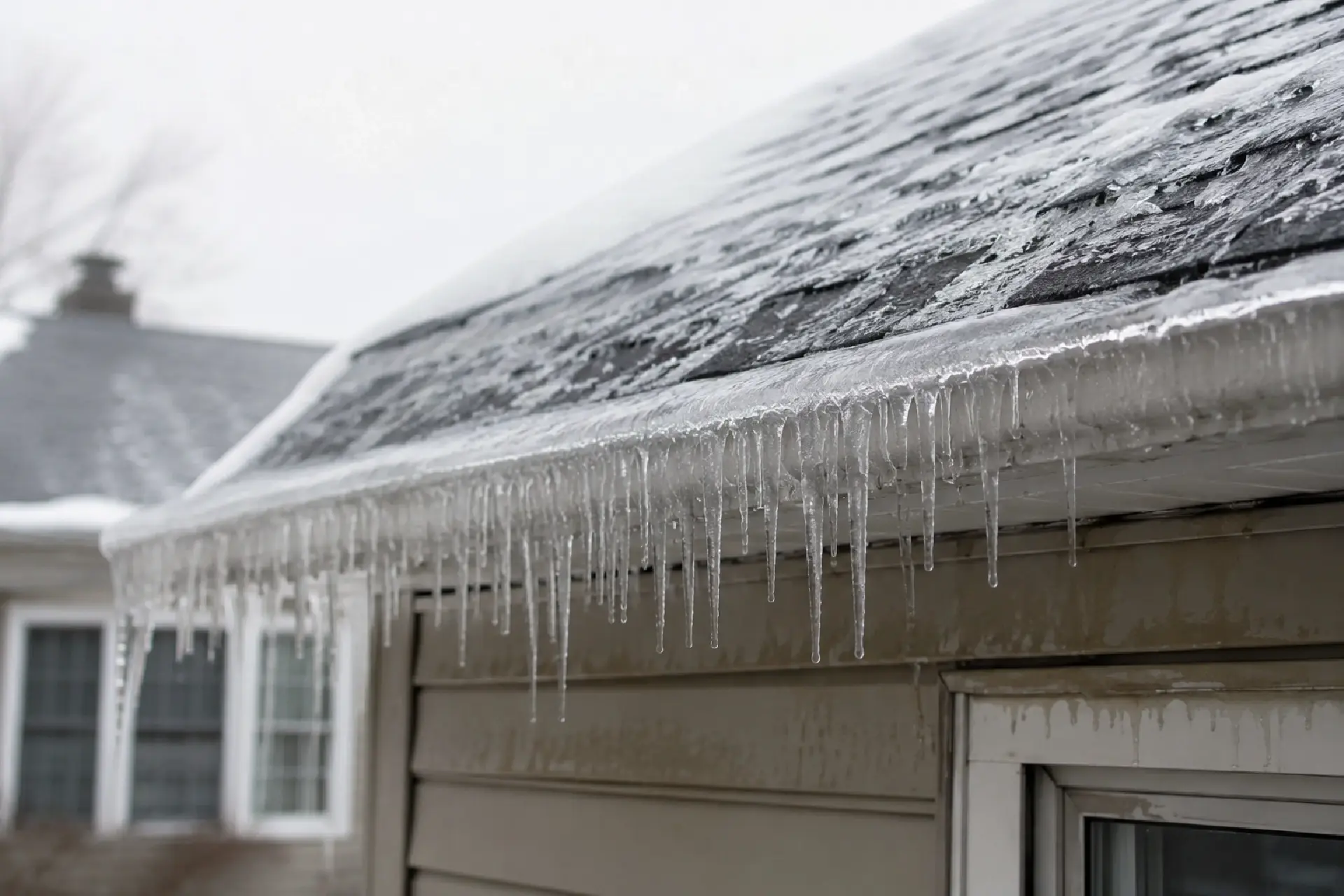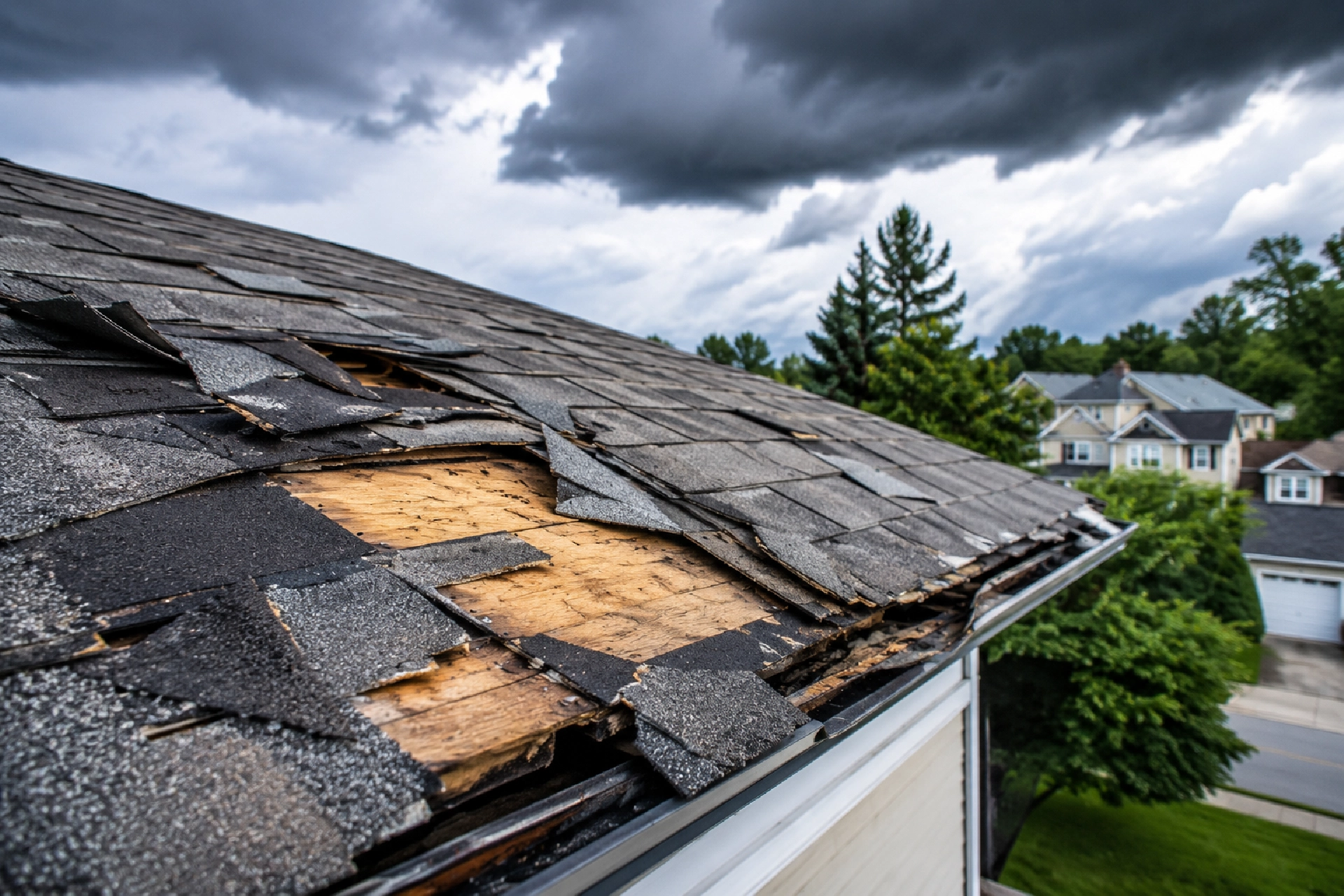
After a Massachusetts storm, plenty of homeowners look up at their roof, see nothing obviously wrong, and assume they’re fine. Others see a couple of missing shingles and assume it’s not worth the hassle of a claim. Both assumptions can be expensive. Roof damage is one of the easiest losses to underestimate from the ground, and the decision of whether to file a roof damage insurance claim in Massachusetts deserves more than a quick glance from the driveway. Here’s how to think it through.
The Damage You Can’t See From the Ground Is the Damage That Matters
The biggest mistake Massachusetts homeowners make is judging roof damage by what’s visible from the yard. A roof can look intact from below while carrying damage that will cost thousands to address. Wind doesn’t always rip shingles off, it often lifts and creases them, breaking the seal that keeps water out while leaving them lying flat enough to look normal. Hail rarely punches obvious holes, it bruises and fractures the surface in ways only visible up close.
This matters because the damage that’s invisible from the ground is exactly the damage that leads to leaks, rot, and interior problems months later, long after the storm that caused it has passed and the connection to a covered event has become harder to prove. By the time a ceiling stain appears, the easy claim window may have closed.
Signs Your Massachusetts Roof May Have a Legitimate Claim
You don’t need to climb onto the roof to spot warning signs. From the ground and from inside your home, look for a few specific indicators after any significant Massachusetts storm:
- Shingle granules collecting in gutters or at the base of downspouts, which signals the protective surface is wearing away or has been knocked loose
- Shingles that look darker, shiny, or lie at a slightly different angle than those around them, a sign the sealing layer has been disturbed
- Any shingles visibly missing, curled, or lifted along the edges
- Water stains on ceilings or upper-floor walls, even small ones, which indicate water has already found a path in
- Daylight visible through the roof boards when you’re in the attic, or damp insulation and a musty smell up there
- Debris impact marks, dents on gutters, vents, or flashing that suggest hail or wind-driven objects struck the roof too
Any one of these is reason enough for a professional inspection before you decide whether a claim is worth filing.
The Deductible Math Most Massachusetts Homeowners Get Wrong
The instinct to skip a claim usually comes down to the deductible. If the visible damage looks like it might cost about what your deductible is, filing can feel pointless. But this calculation is often wrong, because it’s based on the visible damage only.
Here’s the piece people miss. Many Massachusetts homeowner policies carry a separate, percentage-based deductible for wind and named storms, which can be higher than the standard flat deductible, so knowing which one applies matters before you decide. On the other side of the ledger, the true cost of roof damage usually exceeds the surface estimate once underlayment, decking, interior repairs, and code-required upgrades are counted. A loss that looks like it’s barely above the deductible on the surface can turn out to be several times that once the full scope is documented. The honest answer to “is it worth it” almost always requires knowing the real scope first, not the visible one.
When Filing May Not Be the Right Move
Being straight about this matters. A claim isn’t always the right call. If the damage is genuinely minor and clearly cosmetic, if it falls below your deductible even after a thorough inspection, or if the damage is the result of long-term wear rather than a specific covered event, filing may bring more downside than benefit. Massachusetts insurers track claim history, and a denied or withdrawn claim still appears on your record.
The goal isn’t to file no matter what, it’s to make an informed decision. That’s exactly why an independent assessment of the true scope, before you file, is so valuable. It tells you whether you have a claim worth pursuing or a minor repair better handled out of pocket.
Get the Real Scope Before You Decide
The smartest move after significant roof damage in Massachusetts isn’t to guess, it’s to have someone who works for you, not the insurer, assess the full extent of the loss. An insurer’s adjuster inspects with the carrier’s interests in mind. An independent public adjuster for roof damage claims in Massachusetts inspects with yours, documenting the complete damage, including everything hidden beneath the surface, so you know exactly what you’re dealing with before a single form is filed.
That assessment turns the “is it worth it” question from a guess into a decision grounded in fact. And if the scope justifies a claim, you already have the documentation and representation to pursue it fully.
Not Sure If You Have a Claim? Find Out for Free
If a storm has hit your Massachusetts home and you’re unsure whether the roof damage is worth filing on, don’t decide from the driveway. Marinilli Adjusters offers free, no-obligation inspections. We assess the full scope of the damage, explain what your policy covers, and help you decide whether a roof damage insurance claim in Massachusetts makes sense, with no fees until we recover for you.